The Ocarina of Time remake rewards curious players with quiet callbacks, reactive NPCs, and sly visual nods that reward experimentation.
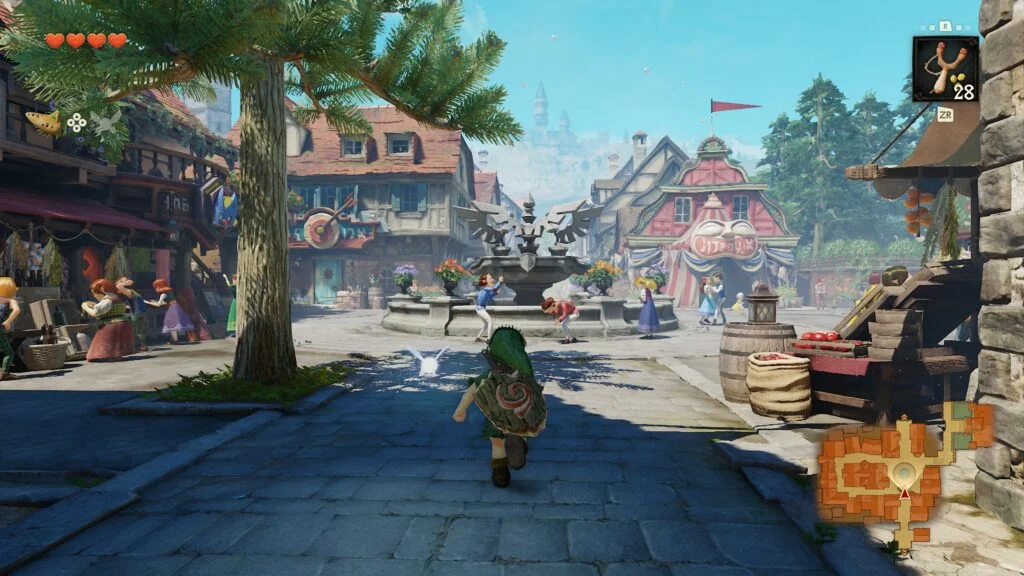
Ocarina of Time has always rewarded players who poke at things, and the remake leans into that habit harder than I expected. Some of what it adds is cosmetic. Some of it is a joke that only lands if you've spent a few hours wandering Hyrule with nothing in particular to do. If you're new to the game, that's the mindset to bring. Try things, talk to people twice, and don't assume a locked door or a blank stare means the game has nothing to say.
Characters Who React to You Differently Now
King Zora is the first place I'd send anyone poking around. Most players will spend their time figuring out which masks change his response, but the remake also adds a physical bit. Force him to turn around and look at you, and he starts nudging you toward the royal dais before remarking on how familiar you're being. Approach him from the side afterward and he gives up, officially declaring you a friend. You still have to earn Biggoron's Sword the long way, though. Friendship doesn't skip the errands.
The Mask of Truth gets similar treatment. Not to be confused with a certain Lasso of Truth, it lets Link revisit people he's already met and uncover what they're hiding behind their personalities. King Zora qualifies, and his worries are more revealing than the bluster suggests. The Dancing Couple's illusion of romance is worth seeing for yourself, too. It's a rare mix of hilarity and dread, and it's a reminder that Hyrule can be a bleak place when you look closely.
Kaepora Gaebora gets a small but memorable gag. Ride with the sagely owl toward Lake Hylia and he'll drop you into the water on purpose. It's a bit of comedy from a character whose quirks sit on top of a much deeper history. It's also easy to miss if you're distracted by the scenery, which is the whole point of the joke.
Callbacks Worth Catching
The remake is clearly building bridges to the games that followed. The floating debris in Kokiri Forest looks a lot like the Koroks from later Zelda titles. That's deliberate, and it's a clever way to wire the visuals to future entries. The timeline doesn't cooperate, though. The Koroks aren't living here during this story, since the Great Flood hasn't hit the region yet. Spotting the resemblance is a nice bit of foreshadowing with no payoff in the present.
Link's relationship with Saria also gets a quieter update. Before he leaves the Kokiri Forest for good as a child, he keeps the Fairy Ocarina Saria gave him. In the original, that wooden instrument was swapped out for the Ocarina of Time as Link's main musical tool. The remake makes room for it as a keepsake. The Ocarina of Time is still his go-to, but it's a small, thoughtful gesture that he hasn't forgotten the friend who gave it to him.
Then there are the Mario references. The remake's visuals make one of them more pronounced. The Mario and Luigi portraits from the original are gone, but Malon and Talon both sport clasps that look a lot like Bowser's. You'll meet them during the quest for Epona, so the nod is hard to miss once you notice it. It's a playful reference to another classic, and I'm glad it survived the upgrade.
Visual and Audio Craft
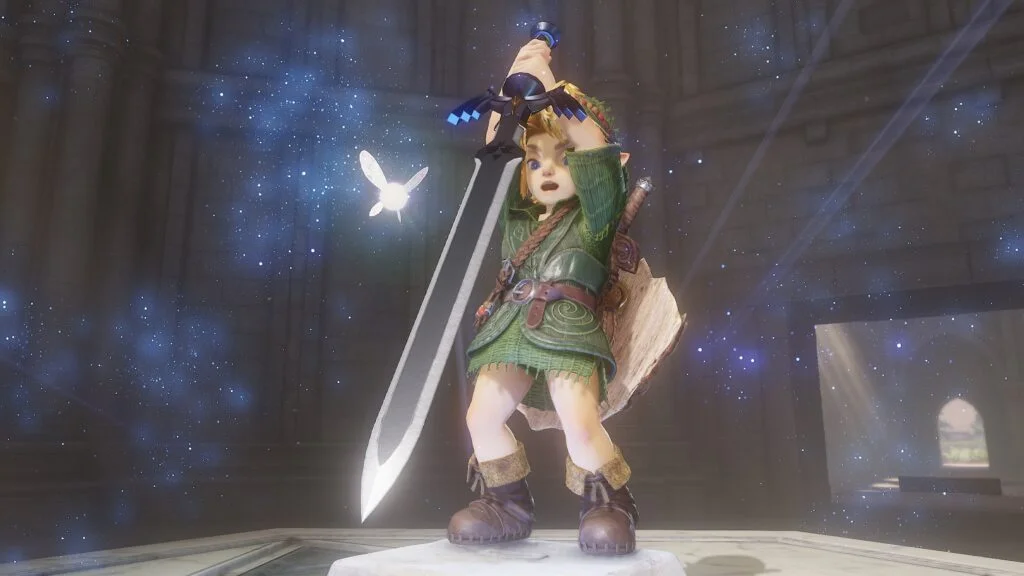
Navi is a good example of how the remake reworks familiar material. Her glow is fuzzier and more natural this time, so she lights up the area around Link more convincingly. Her wings also carry a more intricate pattern than the original. Neither change is dramatic on its own, but together they show how much care went into making this feel like a true upgrade rather than a reskin.
Nintendo UK's conversation with the developers offers some useful context on Young Link's clothing. The new hardware let the team chase detail the original couldn't reach. They went as far as creating their own fabric and studying samples from museums to give Young Link's clothes a hand-woven look that feels like it came from the Kokiri. That's a lot of effort for a costume, and it shows.
Link now plays the songs you learn, too. In the original, that was a static detail. Here, you can watch his fingers move across the holes as he shapes the melody. It's oddly hypnotic, and it makes every tune you pick up feel like something he's actually learned to play.
According to Nintendo UK, the Ocarina's resonance changes depending on where you play it. That's a subtle but welcome layer of environmental detail. The team also says the sound comes from a performance using the real breath of an ocarina, which adds a bit of authenticity to every tune you teach Link.
Systems That Make the World Feel Alive
The Marketplace used to be a backdrop. In the remake, it's a place with routines. Vendors call out to passersby during the day, then wind down as the hours pass and pack up for the night. Some people stop to enjoy the scene as you walk through. None of this changes the story, but it makes the town feel like it has a life that continues without you.
The world also tells you where to go through scale. Landmarks like Hyrule Castle and the Windmill are drawn larger than their surroundings, which signals that they're worth your time. Areas you can't get far into yet lose visual detail, which makes it clear the game expects you to come back later with the right tools. That's a smart way to guide players without a waypoint marker in sight.
Experiment Before You Assume
Some of the best moments come from breaking the usual rules. Deku Seeds are a reliable way to swing a fight, but they also set up a small joke. Throw one into the left window of the courtyard where you first meet Zelda, and a guard retaliates with a bomb. It's a fitting response to what most kingdoms would call treason, and it's a perfect example of how the game expects you to test its limits.
The Gossip Stones work the same way. You've probably used the Mask of Truth to get them talking, but try setting off a bomb near one, or smacking it with the Megaton Hammer. The stone doesn't hold a grudge, and you get some genuinely funny animations for the trouble.
Zelda's Lullaby has a use outside the usual puzzles. If you break a wooden sign while swinging your sword, which will happen often, play the song on your Ocarina and watch the sign rebuild in front of you. It's a returning feature from the original, but it's a good reminder that nearly every tool in your kit has a second life.
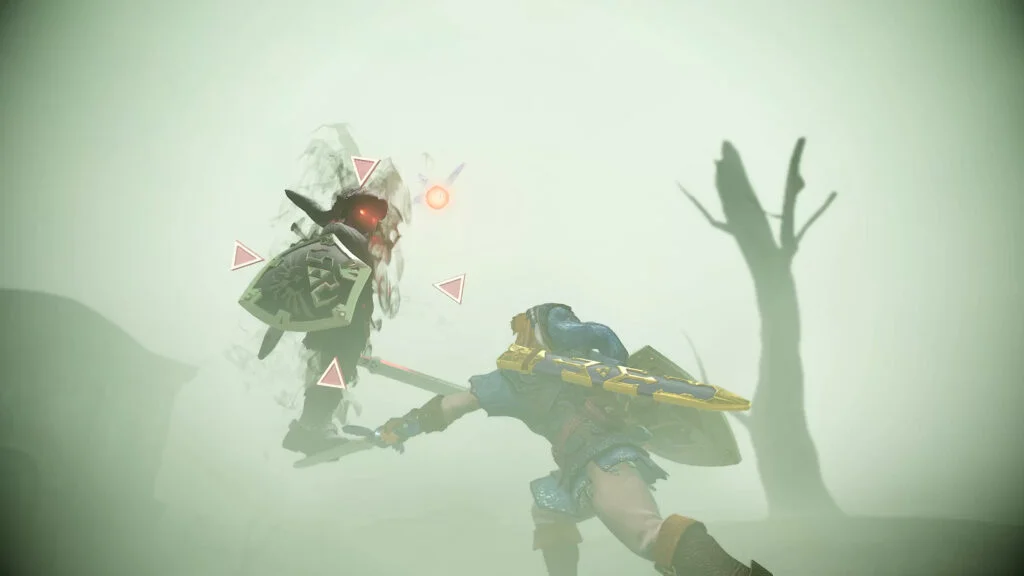
There are plenty more of these to find, including the long hunt for Biggoron's Sword if you want a real test. Still, the remake's best trick is making you want to poke at everything. That's a rare thing for a game this old to pull off, and it's the reason these little details stuck with me. Here's the thing: this is a remake that honors the original while adding enough texture to justify a second trip through Hyrule. Happy adventuring!


Discussion
Sign in to join the discussion.