Boltgun 2 expands its levels and enemy roster while keeping the series’ fast, brutal combat. Uneven weapons and sparse music temper a strong sequel.
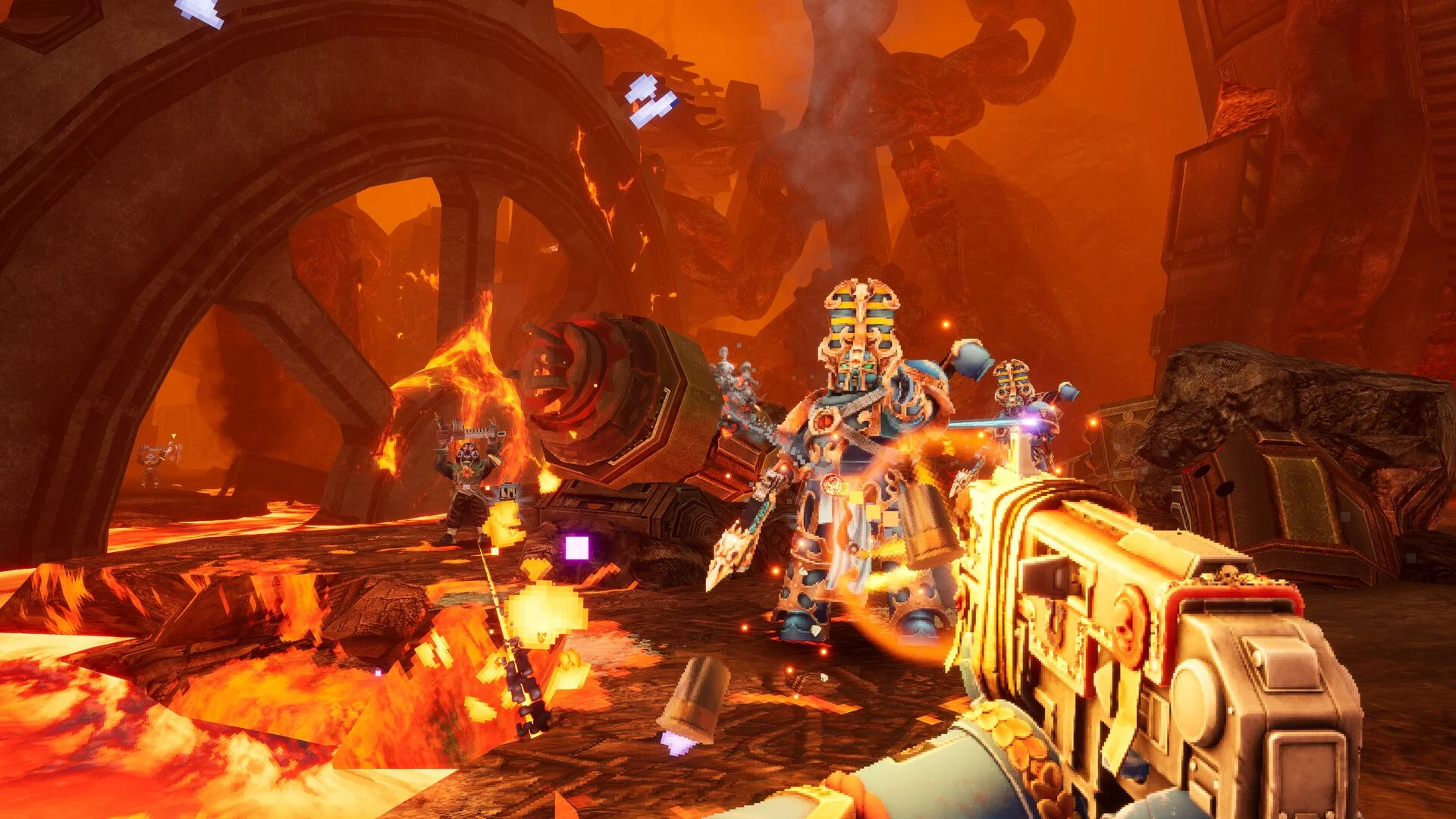
Warhammer 40,000: Boltgun 2 makes its strongest case in the spaces between firefights. The first game captured the thrill of blasting through the grimdark universe, but its levels and enemies could start to feel repetitive. Auroch Digital’s sequel gives those battles more room to breathe, with varied settings, new hazards and enemies that demand different responses. The result is a more satisfying shooter, even if some familiar weaknesses persist.
Levels that give the action room
The sequel opens with a straightforward crisis. While an Imperial fleet orbits Akrimonus Prime, corruption strikes the planet and causes widespread damage. Players take the role of returning Ultramarine Malum Caedo or newcomer Nyra Veyrath, fighting through the resulting enemy occupation in an attempt to purge the threat and escape.
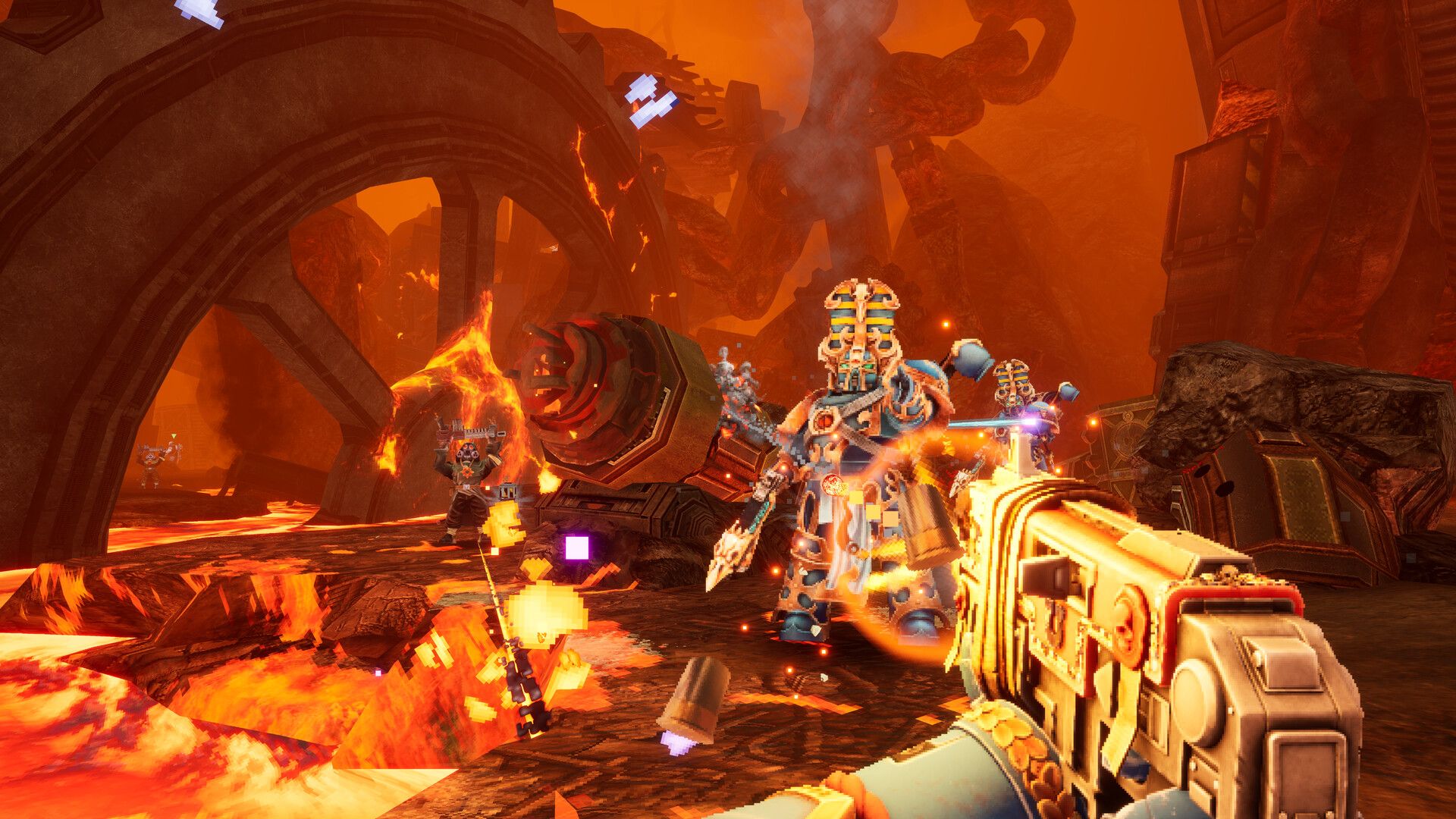
The premise is familiar, and the main story mostly serves as a route from one combat zone to the next. The missions become more interesting when they branch into side operations, where the setting can shape the fighting. In “There is Only War,” for instance, you join the Krieg Death Korps on the way to a munitions facility. The journey moves through open ground, ruined buildings and defended pillboxes before bringing the fighting into the trenches.
Those changes in terrain give encounters a sense of progression beyond a rising enemy count. You can push through the trench lines, but hostile forces have cover and elevated positions to work with. The mission keeps shifting the terms of the fight before you reach the facility, then the capital beyond it.
Other levels offer similarly distinct settings. A prison’s narrow corridors make every sealed cell a possible ambush point. A blood fortress starts with sweeping spaces before revealing a larger danger below. In one of the most memorable sequences, you travel into the heart of a corrupted moon by cargo train, firing at enemies alongside the moving vehicle before descending farther into the complex on minecarts.
That variety helps the familiar key-hunting structure feel less like a checklist. Navigation can still be confusing at times, but an in-game guide helps point the way. The levels also make room for platforming and environmental hazards, adding new rhythms to a game built around maintaining momentum.
Not every stage reaches the same standard. The first mission of “Welcome to the Wilds” and the second mission of “Breaking the Ice,” both included in the demo, felt weaker than the game’s best sequences. They aren’t disasters; they simply lack some of the more inventive layouts and mechanics found elsewhere.
"Just when I thought Boltgun 2 didn’t have any other tricks up its sleeve, it surprised me with some platforming sections and environmental hazards."
Two combat styles, with uneven weapons
Malum and Nyra both feel good to control, but they approach a fight differently. Malum moves with the weight you’d expect from an Ultramarine and starts with more health than he had in the demo. Nyra is faster, has a higher base armor value and can slow time while jumping out of a slide. That armor advantage may seem like an odd fit for the quicker character, but the distinction gives each protagonist a clear feel.
Both characters benefit from the same aggressive survival loop: defeated enemies drop health and armor, so staying alive means pressing the attack. That system rewards forward movement and makes hesitation costly. It also supports the game’s most satisfying encounters, where a player has to keep shifting targets and choosing weapons while under pressure.
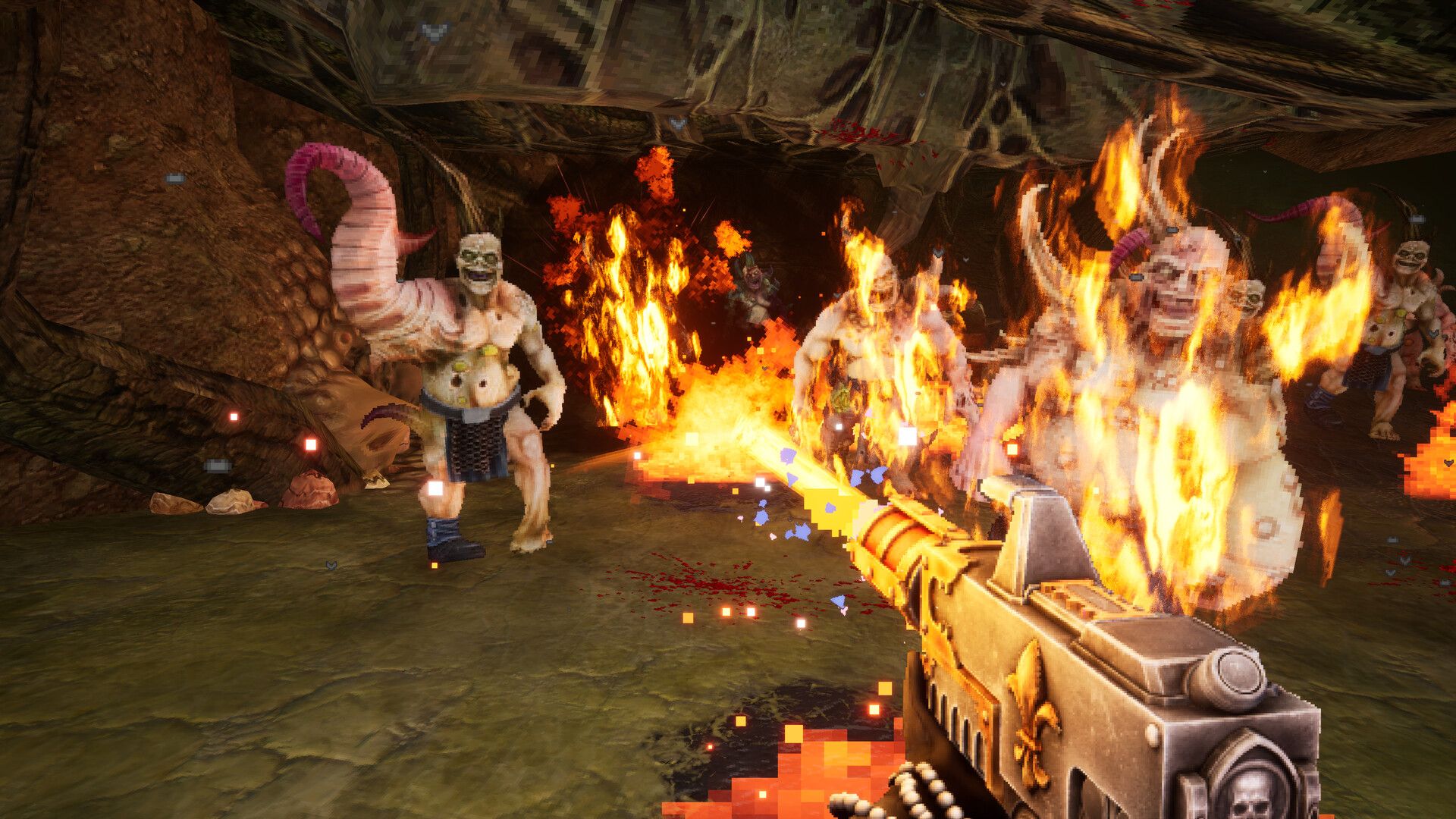
The expanded enemy roster gives that pressure more texture. Some daemons are vulnerable to close-range attacks and shotgun blasts; others are better handled by backing away and keeping them at a distance. Bloodletters can be shot out of their jumping attacks, while Berserkers become much more dangerous near death and are best executed quickly. Enemy marines fire projectiles that can disorient you, and phase-shifting Scarab Occult Terminators add another threat to track.
That variety makes fights more than a test of aim. The right response changes with the enemy, and groups often combine different types of threat. The game’s combat feels best when those demands keep you moving, using the space around you and swapping tactics instead of standing still to trade shots.
The weapons are a less consistent improvement. Malum receives one new weapon, the Frag Cannon, while the Vengeance Launcher from the original is gone. The Meltagun now behaves more like a mid-range beam than the thermal shockwave familiar from the first game, and the Heavy Bolter feels less satisfying to ready. Nyra gets more of the new gear, including the Heavy Flamer and Stake-Thrower. The Stake-Thrower can feel awkward, while the powerful Melta Bomb takes time to learn how to deploy effectively.
"I’m a bit disappointed that Malum gets one new armament – the Frag Cannon – while the Vengeance Launcher is gone…I’m also not a big fan of how the Heavy Bolter feels when readying it compared to the original."
Fast kills, with a few durable exceptions
Enemy toughness was a concern in the first Boltgun, and the sequel handles it better in many encounters. Standard soldiers go down cleanly to the Boltgun, often in one shot and sometimes in two. Heavier weapons have a clear role against more imposing foes, whose power matches their place in the setting.
Some enemies still take more punishment than feels ideal, even on Medium difficulty. Tormentors are the clearest example. The extra durability doesn’t derail the combat, but it can slow the pace when the game’s best fights depend on keeping up a steady offensive. Hard difficulty preserves that forward drive, though quick movement techniques such as tap strafing become more important for staying alive. Exterminatus, the highest difficulty, wasn’t part of this review.
A strong visual identity, quieter soundtrack
The pixel art remains a standout. With more environments to explore, the sequel gives its art direction a wider range to work with, while keeping the oppressive atmosphere that makes the Warhammer 40,000 setting so recognizable. Auroch Digital’s translation of that universe into retro shooter visuals continues to feel considered and distinctive.
The music doesn’t maintain the same presence. Much of the score can fade into the background, leaving stretches of combat with less energy than the visuals and action suggest. The final boss battle is a notable exception: Mick Gordon’s composition gives the encounter the force the rest of the soundtrack often lacks.
Boltgun 2 doesn’t remake the boomer shooter, but it does improve on the original where that game needed the most help. More varied levels and enemies turn the core loop into a better-paced campaign, even as some weapons, a handful of stages and the quieter music fall short. For fans of Warhammer 40,000 or fast, aggressive shooters, it’s a worthwhile return to the fight.
This game was reviewed on PC.

Discussion
Sign in to join the discussion.