Warlock: Dungeons & Dragons will feature a fixed main story, centering on character Kaatri, while prioritizing player-driven exploration without waypoints.
In the upcoming Warlock: Dungeons & Dragons, players can expect an engaging narrative experience, but general manager Dominique Guay has clarified that the main storyline will remain static, irrespective of player choices. According to Guay, who discussed the game with Eurogamer, the character Kaatri is crafted with a specific arc, meaning players won’t enjoy vastly different story trajectories based on their decision-making.
Static Storyline: A Departure or an Evolution?
“We’re being very clear on that. Kaatri is a written character, so it’s not like you can play evil or good Kaatri," Guay stated. "The main narrative moments you’re going to experience are predetermined, and you’ll share those moments with other players.” This statement is a clear attempt to differentiate the game from Larian's acclaimed Baldur’s Gate 3, which prides itself on offering extensive player agency. In fact, many RPGs today lean heavily into branching narratives that respond dynamically to player choices. By choosing a more linear approach, Warlock risks alienating fans who revel in the freedom to shape their own stories, yet it could also attract players who prefer a more guided experience. The question is whether a static storyline can hold a candle to the allure of choices and consequences.
Character Depth: Kaatri and Skev
Unlike ensemble casts typical of many RPGs, Warlock focuses on Kaatri and her imp, Skev, emphasizing their relationship as a key element of the narrative. Guay mentioned that Skev is not just a sidekick, but a character with his own motivations, leading to a deeper story surrounding their evolving bond. This meticulous crafting of character dynamics signals a shift toward more intimate storytelling that prioritizes relationships over sprawling plotlines. The dedication to character development can offer a more emotionally resonant experience, yet it might also limit the scope of interaction that players expect from an RPG.
Gameplay Mechanics: Encouraging Exploration
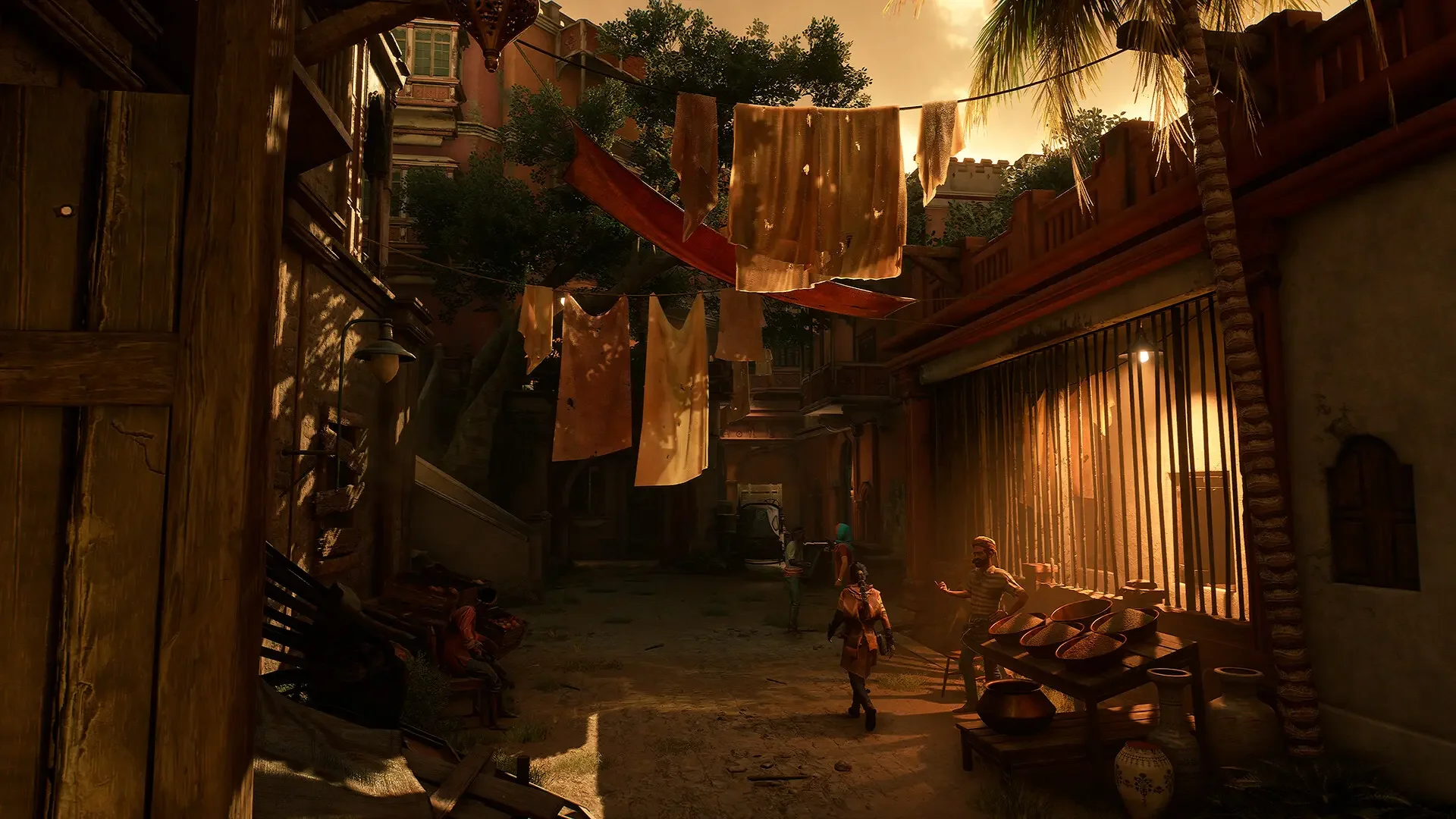
Turning to gameplay mechanics, Guay has reiterated the design philosophy that Warlock will forego traditional waypoint systems, a feature intended to encourage active exploration. "We want the game to be primarily about discovering the world rather than simply following a waypoint around," Guay explained. “Players should feel encouraged to visit various locations, be curious, and uncover secrets.” This design is significant because many modern games can feel more like guided tours than genuine explorations. The notion that players have to chart their own courses in Warlock can revitalize engagement in a medium often criticized for its formulaic approaches.
Travel Dynamics and Design Intentions
Guay reflected on the team's past experiences with more structured exploration in other open-world titles, acknowledging that many players tend to follow waypoints blindly. This can sap curiosity and engagement from the gaming experience. “What ends up happening is that players lose their agency and the feeling of discovery," he noted. "For this game, our goal is to empower players to explore on their own.” The emphasis on active exploration is a welcome change, and it could result in a gaming experience that feels fresher and more immersive. After all, players are often looking for a sense of adventure and surprise, and this approach could deliver just that. (And this is the part most people overlook: player choice isn't only about branching narratives; sometimes it's about how one interacts with the world.)
Traveling with Purpose
"We don’t want you to have to travel for 15 minutes to find a new location,” he added. “You should always be within a minute or a minute and a half of somewhere interesting.” This perspective not only enhances the experience of exploration, but also indicates a broader design philosophy that values player time. The pacing of game mechanics plays a significant role in keeping players engaged—similar systems typically ensure that players remain hooked by constantly introducing elements that demand attention. Here’s the thing: if implemented well, this could keep the energy high and the pace brisk, resulting in a more satisfying gameplay loop.
Looking Ahead: Implications and Future Considerations
Scheduled for release in 2027, Warlock: Dungeons & Dragons will be available on PC, PS5, and Xbox Series X/S. The game aims to carve its niche by prioritizing personal narrative integrity and immersive exploration. But will this static storytelling and unique approach to exploration satisfy the long-standing audience of traditional RPGs?
This proposed design direction feels like a double-edged sword. On one hand, limiting narrative choices might streamline the story and deepen character arcs. On the other, it risks disenchanting audiences that have grown accustomed to narrative fluidity. What this means for you, if you're working in this space, is that the success of Warlock will likely hinge on its ability to provide a meaningful experience without the extensive choices that have become a hallmark of the genre.
As we contemplate the impact of Warlock on the RPG genre, one question remains: will players embrace a game that chooses a predetermined narrative adventure or will they wish for the expansive freedom that has become second nature in modern RPGs? Time will tell, but the choices made here certainly set it apart in a crowded market.


Discussion
Sign in to join the discussion.