The 90-location Southern chain takes the top spot again, ahead of Farmer Boys, Del Taco, McDonald’s and Chick-fil-A.
A regional chain at the top
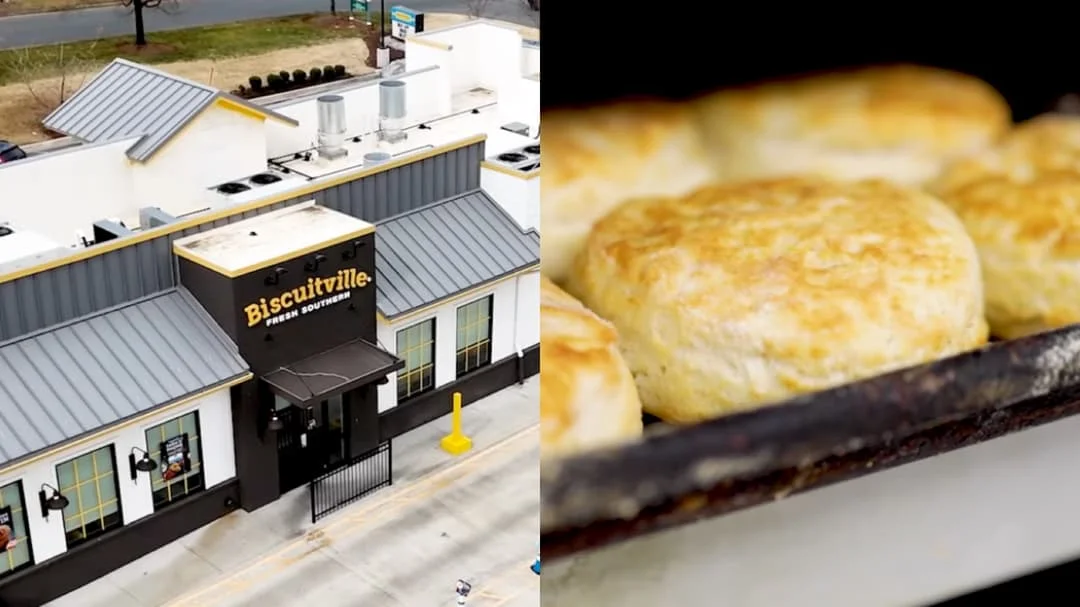
Biscuitville has been named America’s best fast-food breakfast by USA Today’s 10Best ranking for the fourth consecutive year, finishing ahead of McDonald’s and Chick-fil-A. The result puts a small regional chain in the same conversation as national names with far wider reach. That’s a striking outcome, but the ranking also points to a more specific advantage: Biscuitville has a clear idea of what its breakfast is supposed to be.
That identity is rooted in Southern breakfast rather than a menu designed to feel interchangeable across the country. Biscuitville operates 90 restaurants in North Carolina, South Carolina and Virginia, and its menu centers on traditional dishes associated with the region. For customers, that focus can make the chain easier to recognize and remember. A familiar national brand may offer convenience across many markets; a regional restaurant can compete by making its local character part of the product.
The company says it makes biscuits from scratch every 15 minutes using a family recipe. That detail gives the brand a tangible point of distinction: it describes a routine customers can connect to the food, rather than an abstract claim about quality. The cadence also suggests that freshness is central to how Biscuitville presents its breakfast. The claim alone doesn’t tell us how every restaurant performs at every moment, but it helps explain the chain’s pitch.
Those biscuits can be ordered with bacon, egg, cheese or fried chicken, and the menu includes Southern staples such as country gravy and grits. The combinations are straightforward, which is part of their appeal: they make the biscuit the foundation of the meal while giving customers several familiar ways to order it. Chief marketing officer Kristie Mitchell told Fox News that customers often say the biscuits taste like the ones their grandmothers made.
That comparison is emotionally resonant, and it’s also a useful description of the brand’s intended territory: home cooking, memory and regional habit. It doesn’t establish that every customer shares the same experience. Still, a chain that can connect a fast-food meal with a personal food memory has a story that a broader menu may find harder to tell. The food has to carry that promise, of course. Marketing can introduce the idea; repeat visits depend on whether the meal lives up to it.
National names trail in the rankings
Farmer Boys finished second and Del Taco third in the USA Today 10Best results. McDonald’s ranked fourth, Chick-fil-A fifth, Burger King sixth and Wendy’s seventh. The order makes the result notable because it places a regional specialist above several familiar national competitors, while also showing that the list includes chains with different menu identities.
A ranking offers a snapshot of recognition, not a full account of customer behavior. It doesn’t tell readers how each restaurant performs in every market, how often customers return, or what factors shaped individual votes. Those limits don’t make the result meaningless. A repeat win can help a smaller chain earn attention from people who might otherwise know it only as a local option, and it gives the company a concise claim to use when describing itself.
Here’s the thing: repeated recognition is most useful when it reinforces a product customers can identify. Biscuitville’s story is unusually concrete for a restaurant ranking. It points to scratch-made biscuits, a stated preparation rhythm, and a menu built around Southern breakfast. That’s more persuasive than simply saying a chain is popular. The numbers here are underwhelming as a measure of market reach—the chain has 90 restaurants—but the distinction is precisely that it has earned this recognition while operating across three states.
That said, a ranking can raise expectations as well as visibility. Someone encountering Biscuitville for the first time may arrive expecting the biscuits to taste homemade and the menu to reflect a particular regional tradition. If you’re working in this space, that’s the tradeoff to watch: a distinct identity can separate a brand from larger competitors, but the promise has to remain recognizable as the company grows. A national footprint isn’t required for a restaurant to matter in a national conversation.
Expansion will test the identity
Mitchell said the company values the recognition but doesn’t want to take it for granted. That caution makes sense. Awards can validate a brand’s direction, but they can’t guarantee that customers will keep responding to the same menu or that a company can deliver a consistent experience across more locations. The fourth consecutive win is a meaningful signal of staying power in the ranking. It’s not a substitute for the day-to-day work of maintaining the food and service that support the reputation.
Biscuitville is looking at expansion into Tennessee and Georgia, which would take the chain beyond its current three-state footprint. Those markets would extend the company’s reach while keeping it in the broader South, but the article doesn’t establish how or when any expansion would happen. The strategic question is clear even without those details: can the chain bring its existing identity to new communities without making the brand feel generic?
And this is the part most people overlook: expansion changes more than the map. A company has to make its defining experience legible to customers who may not already know the name, while preserving the routines and menu choices that existing customers recognize. For Biscuitville, the scratch-made biscuit is a strong anchor because it connects the brand’s process with its food. But an anchor has to hold in each restaurant. A reputation built on familiarity and freshness leaves little room for the product to become an afterthought.
There’s no guarantee that the chain’s appeal will transfer unchanged into new markets. Regional foods can travel, but their meaning may vary from place to place, and the company will have to earn familiarity one customer at a time. The opportunity is real. So is the test.
Biscuitville’s fourth straight win is more significant than it looks because it shows how a focused regional identity can compete for attention beside nationally recognized brands. The next measure of that strategy won’t be the ranking alone. It’ll be whether the biscuits, menu and sense of place remain distinctive as the company considers moving beyond the three states where it currently operates.



Discussion
Sign in to join the discussion.