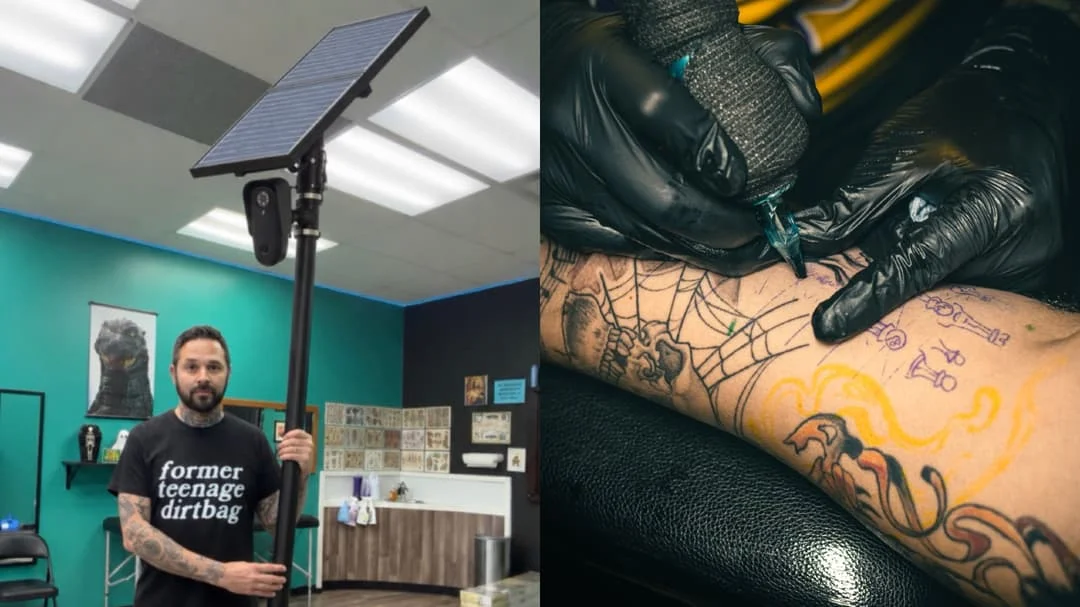
In a bold move that merges art with an ongoing debate about surveillance, a tattoo artist from New Baltimore, Michigan, is offering free tattoos to anyone who presents a Flock camera at his shop. This peculiar promotion raises eyebrows and poses significant questions about the implications of surveillance technology in everyday life.
Flock cameras, produced by the for-profit company Flock Safety, function as Automated License Plate Readers (ALPRs) that leverage AI to track vehicles by capturing details like license plate numbers, car make and model, as well as color. While their utility in crime prevention is often touted, these devices have drawn heavy criticism due to their potential for undesirable mass tracking — logging the movements of individuals indiscriminately, not just those suspected of wrongdoing. This negative perception has likely driven Steven Jean, the owner of The Alien Body Shop, to devise this offbeat offer.
Jean's Instagram post showcasing himself with a Flock camera and the caption, "Free tattoo with every Flock camera," has gone viral, reaching over two million people. His intention, as articulated in a CBS News interview, was to satirize the invasive nature of surveillance, yet the reaction has been unexpectedly serious. Some viewers seem to have taken him at his word, with individuals sending him images and clips of themselves damaging Flock cameras.
“People are actually showing me proof of vandalism,” Jean stated, highlighting how his satirical art project has sparked real-world consequences. This intersection of humor and social commentary underscores a significant cultural moment. If you’re in the tech industry or involved in discussions around privacy and ethics, it seems clear that this stunt serves as a reminder of how deeply surveillance concerns resonate in various communities today.
The Backlash Against Surveillance
Jean's controversial promotion raises crucial inquiries about public sentiment toward surveillance technology. More than just a gimmick for tattoos, it reflects a broader societal pushback against systems perceived as intrusive. As discussions around privacy intensify, instances like this resonate well beyond the boundaries of the tattoo shop, echoing sentiments of distrust and discontent toward monitoring systems.
The engagement surrounding this offer reveals a unique blend of humor and frustration, pointing to a growing awareness and critique of surveillance technologies in everyday life. Jean’s art, even in its jest, uncovers stark truths about how technology shapes our realities — and it invites all of us to reflect on what we're willing to accept in the name of security.
The Future of Surveillance and Public Sentiment
The dialogue around surveillance technology, particularly the Flock cameras, underscores a rising tension between public safety and individual privacy. A recent incident involved an individual reaching out to Steve, a local business owner, admitting an arrest linked to vandalism of one of these cameras. While this might appear as an impulsive act by an aggrieved citizen, Steve's response is telling. He explicitly advised against any unlawful actions, emphasizing the importance of adhering to the law while still engaging in spirited debate about these technologies. "Please do not bring Flock cameras to my shop! It’s all about obeying the law and having a good time," he stated, reflecting a nuanced stance that accepts surveillance as a current reality while advocating for lawful expression.
As we look ahead, the conversation surrounding Flock cameras serves as a microcosm for broader societal trends. Public reaction, such as the "De-Flock" campaign which gained traction around Halloween, points to a significant grassroots movement questioning the ethics of constant surveillance. You can read more about this dynamic in our article on the viral campaign [here](https://www.dexerto.com/entertainment/flock-camera-controversy-explained-as-viral-halloween-de-flock-campaign-gains-momentum-3399710/).
It’s clear that as technology evolves, so too will our collective attitudes toward it. Controversies like this one raise critical questions: Are these cameras really enhancing public security, or are they eroding trust within communities? While it’s uncertain how policies and societal views will shift in response to these incidents, one thing is evident: the debate over surveillance tech is far from over. For a deeper dive into how these systems affect our everyday lives, check out our coverage on platforms allowing drivers to verify if their plates have been checked against Flock’s database [here](https://www.dexerto.com/entertainment/new-website-lets-drivers-check-whether-their-license-plate-has-been-searched-on-flock-database-3398804/).
As people continue to push back against perceived invasions of privacy, businesses and policymakers will need to strike a balance between safety measures and the rights of individuals. This balancing act will not only define the future of security technology but also shape the public’s acceptance of surveillance systems.



Discussion
Sign in to join the discussion.