Windup Games’ mouse-led puzzle adventure launches December 1 with cross-play for up to four players across PC and consoles.

Cross-play is the latest detail
Cross-play is the clearest new detail in the latest video for Hela: Of Mice & Magic. The 3D puzzle platformer from Windup Games and Knights Peak launches December 1 on PC and consoles, with support for up to four players to explore the full adventure together across platforms. That means friends on different systems can share the same journey, an increasingly familiar expectation for co-op games that aim to keep groups together across hardware.
The feature matters because it affects who can play together, not just how many players can join. A four-person limit gives the game room for a small group, while cross-play removes one practical barrier to organizing that group. The announcement doesn’t specify how matchmaking or invitations will work, so the video’s key promise is straightforward: platform choice won’t prevent friends from taking on the adventure together.
That shared journey fits a game built around small acts of help. Players take the role of mouse familiars sent out by an ailing witch, who has watched over the land for centuries but can no longer travel herself. The world has lost its balance, and restoring it means the mice must find a new way forward rather than simply repeat the old patterns. Here’s the thing: that premise gives cooperative play a narrative reason to exist, instead of treating multiplayer as an extra mode bolted onto the side.
A co-op story shaped by exploration
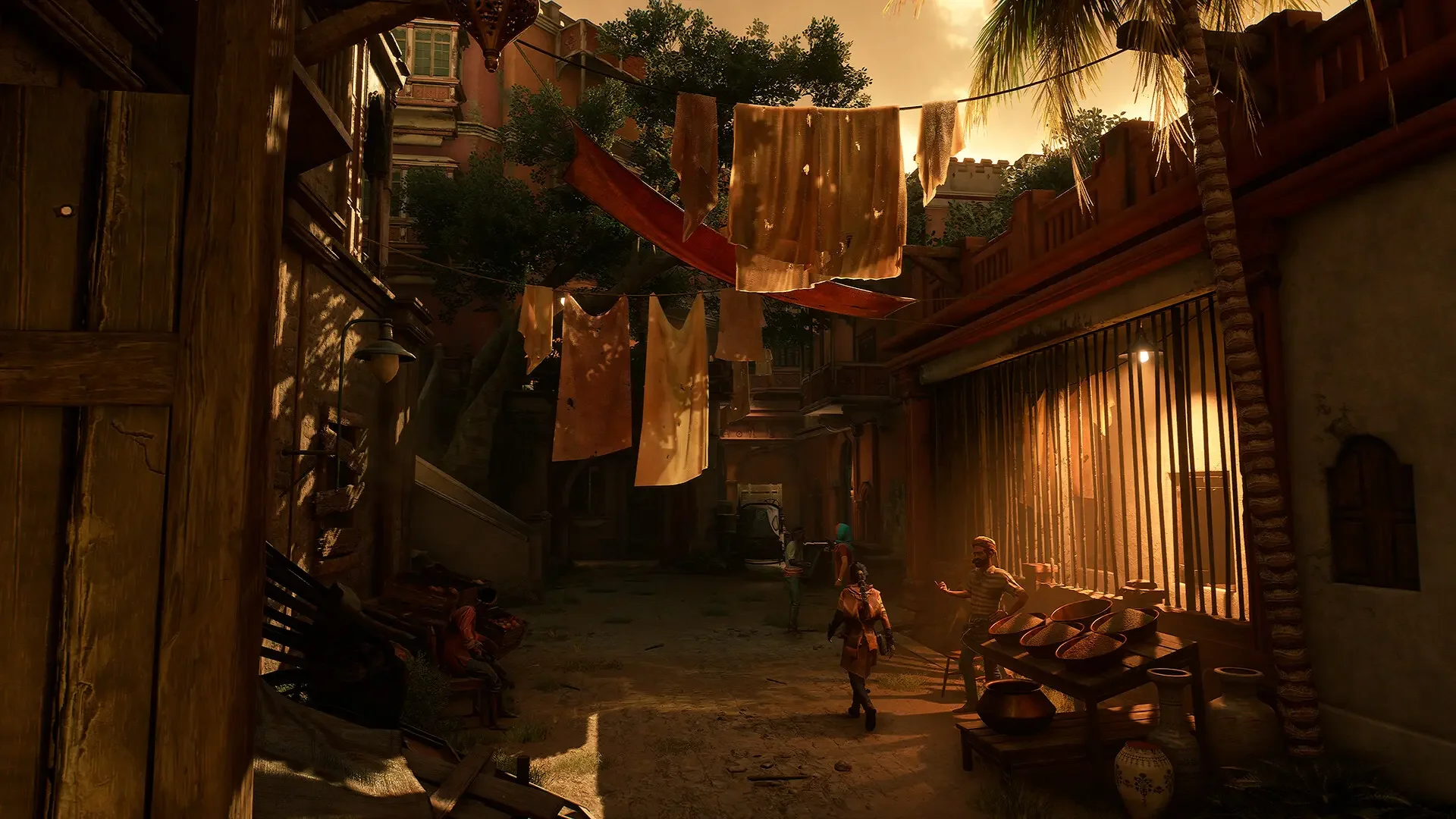
The game’s appeal appears to rest on the contrast between a modest role and a broad undertaking. As the witch’s familiars, players solve puzzles, explore the countryside and help woodland residents. The story also points toward older forces in the setting: encounters with figures such as the mysterious Ritual Keeper connect the journey to the land’s history and ancient magic. That combination suggests a story that moves between immediate problems and a wider mystery, though the available details don’t reveal how closely those threads will be tied.
Letters arriving at the witch’s cottage give the mice reasons to venture out and meet people across the region. Returning home brings the witch’s own stories, linking discoveries in the world to a larger narrative. The structure suggests that progress will come through attention and assistance as much as through solving the next challenge. It also gives the cottage a useful role as a recurring point of return: a place where local errands can build into a broader account of what has changed in the land.
This is more significant than it looks. In exploration games, a sequence of tasks can feel arbitrary if the world gives players no reason to care about the people in it. Letters and recurring conversations offer a simple way to make each excursion feel connected to a community. The risk, of course, is that helping residents becomes a checklist; the premise will work best if those encounters meaningfully shape what players learn about the region.
- Credit: Windup Games
- Credit: Windup Games
- Credit: Windup Games
- Credit: Windup Games
- Credit: Windup Games
- Credit: Windup Games
- Credit: Windup Games
- Credit: Windup Games
- Credit: Windup Games
Solo play remains an option
Although four-player cross-play gives friends a way to tackle the adventure across different systems, the game can also be played alone. Players can set their own pace, follow curiosity through the environment and choose which characters to help. That flexibility suits a story focused on exploration, puzzle-solving and the relationships built along the way. It also leaves room for different habits: a group might divide its attention across a shared outing, while a solo player can linger over one path or conversation.
That distinction matters for a game whose central activities involve both movement and problem-solving. Co-op can make those moments social, but it can also change the pace and focus of a puzzle; playing alone gives the player full control over when to stop, explore or continue. The announcement doesn’t explain whether puzzles adapt to party size, so the balance between solo and group play remains an open question.
What cross-play means for the adventure
Cross-play is a practical feature, but it’s only one part of the appeal. The game’s identity will depend on whether its puzzles, exploration and story work at a satisfying pace for one player and for a group. That’s a meaningful design challenge: an activity that feels rewarding when friends tackle it together can feel slow alone, while a puzzle designed for a single player may offer little for a full group to do.
If you’re working in this space, the more telling detail is how the game connects cooperation to its fiction. The mice are helpers, and their purpose is to restore balance by responding to a world that needs care. That gives the adventure a clear emotional center. And yet, the premise alone can’t show whether the moment-to-moment play delivers on it. The proof will be in how exploration, puzzles and character encounters fit together. A promising setup.
Hela’s premise gives its co-op a clear purpose: a group of tiny helpers trying to restore harmony to a world in need. With a December 1 release date confirmed for PC and consoles, the new video frames the central question as how players will shape that journey together—or on their own. For now, the details establish the shape of the experience and the promise of shared play; the depth of that experience will have to come from the game itself.



Discussion
Sign in to join the discussion.