Nintendo’s Switch 2 remake adds modern controls, voice acting and new ways to track progress. It launches November 5 for $59.99.
A remake built around how the original plays
The Switch 2 version of The Legend of Zelda: Ocarina of Time is shaping up as more than a visual upgrade. Nintendo’s latest overview gathers eight changes, including revamped movement, new story presentation and progress tracking. The aim is to make the N64 adventure feel more at home on modern hardware, while giving returning players reasons to pay attention beyond sharper images.
The remake launches exclusively on Switch 2 on November 5, priced at $59.99 in the US. Nintendo is positioning it as a centrepiece of the series’ 40th anniversary, which also includes a special edition console. That framing gives the release a dual role: it has to introduce a landmark game to newer players and persuade longtime fans that another trip through Hyrule has something to offer.
Modern controls meet a rebuilt presentation
Nintendo’s video recaps features already shown in earlier marketing. It highlights dashing and jumping, a redesigned camera, upgraded visuals, voice acting in story scenes, additional character dialogue and a full symphonic orchestral score. Together, those changes touch how the game moves, sounds and tells its story, rather than focusing on resolution alone.
The controls may be the most consequential change for returning players. Nintendo says Link can jump and dash, while camera movement has been updated. Those additions could alter the rhythm of exploration and combat, areas where a game designed for an older controller can feel dated even when its world and puzzles remain compelling.
The store listing describes the adjustments as a way to make the game a more accessible entry point to the series. That’s a useful goal, though accessibility here appears tied to updated controls and presentation; Nintendo’s overview doesn’t claim that the underlying adventure has been redesigned. For veterans, the question is whether the new movement makes familiar encounters feel better without changing what made them work.
The audio update reaches beyond dialogue. Nintendo’s October 14 overview post says the remake pairs its new voice work with orchestral music, giving familiar scenes and locations a different sound. A fuller score can shift a scene’s mood, while voiced story moments change how players receive information that was originally delivered through text.
Aiming and ocarina songs offer flexible input
Motion aiming is optional. Players can use gyro controls or buttons to aim the Fairy Bow, Hookshot and other ranged weapons, with the choice available in the Options menu. That flexibility matters because aiming is a repeated action, and a control method that feels natural to one player may be awkward for another.
The microphone can also recognize ocarina songs. Players can hum a tune Link has learned or perform it on an instrument; button inputs remain available for those who prefer a quieter option. The feature turns a familiar part of the game into a more direct interaction, though keeping button controls means players aren’t required to use a microphone to progress.
That choice is a small but telling design decision. Nintendo is adding new ways to interact while preserving a conventional input path, which should make the feature easier to approach across different play settings.
New spaces record the adventure
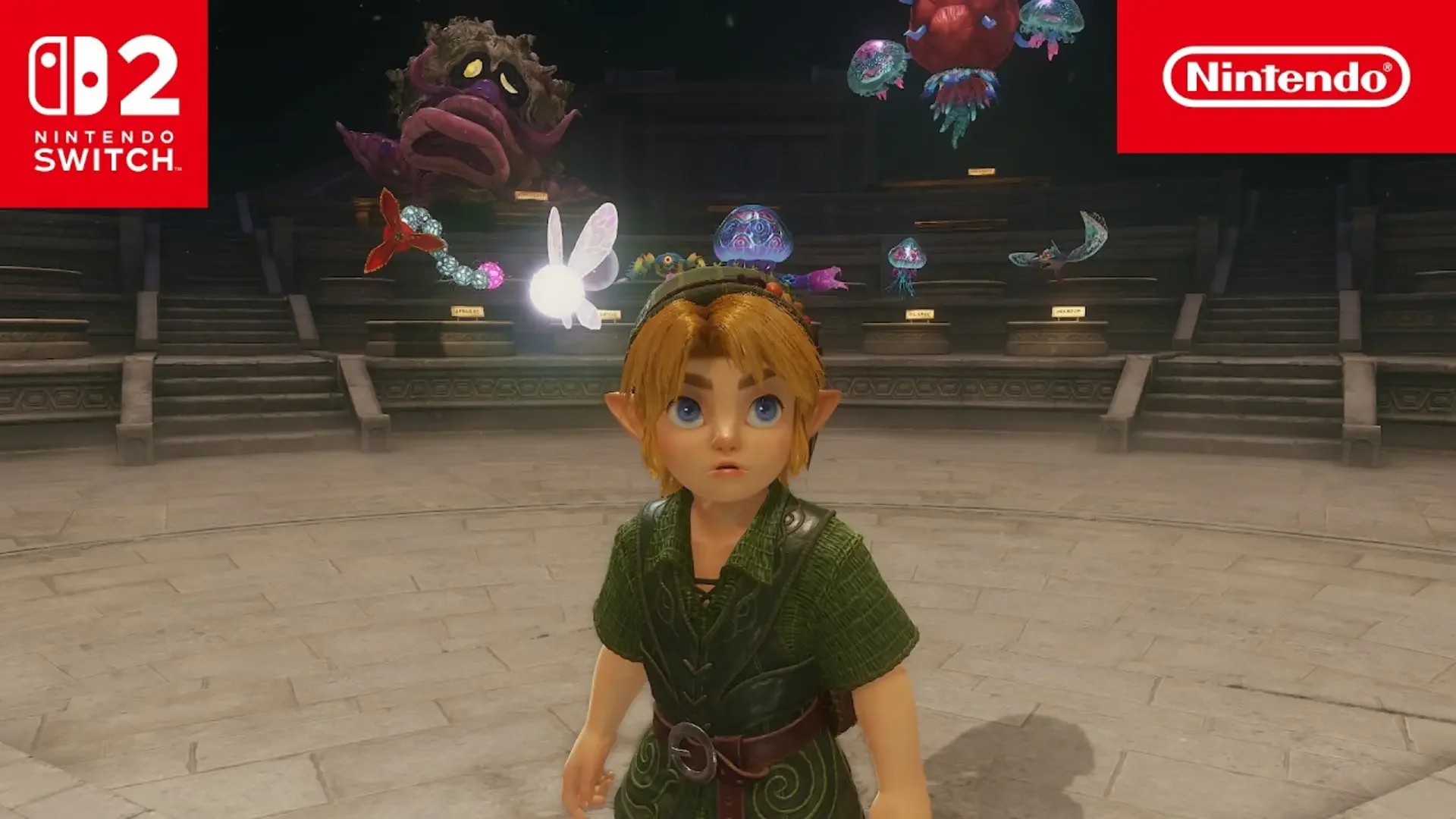
Two additions give the remake a clearer record of what players have accomplished. The Threads of Time tapestry charts progress through the story, while a dedicated hall displays statues of defeated monsters. Players can inspect those creatures or challenge them again. One feature tracks narrative progress; the other turns combat history into something players can revisit.
Nintendo’s October 14 post calls the room the Hall of Fallen Heroes, while the current store listing names it the Hall of Fallen Foes. The listing also mentions hidden fairy lore around Hyrule and new or expanded dialogue for characters across the kingdom. Those details suggest Nintendo is using the remake to add context around the existing world, though the available description doesn’t say how extensive those additions are.
Launch details and later amiibo
Nintendo’s store page estimates a 27 GB download and lists TV, tabletop and handheld play, along with HDR and VRR output on compatible televisions. The Nintendo Switch App will support ZELDA NOTES, including image-based location hunts and a phone-based ocarina. Existing Legend of Zelda amiibo can also unlock rewards.
These features stretch the experience beyond the console itself, but they’re optional layers around the main game. If you’re returning for the adventure, the controls, extra dialogue and new tracking spaces are likely to matter more than a companion app. And this is the part most people overlook: adding more ways to engage with a familiar game doesn’t automatically make its old pacing feel new.
Digital purchases made before November 23 at 11:59 p.m. PT include a 40th anniversary wallpaper. Two new amiibo, Young Link and Young Zelda, are scheduled for 2027; each unlocks a retro-style mask in the game. Nintendo lists its Electric Ocarina of Time accessory at $49.99. The accessory and amiibo extend the anniversary merchandise, while their in-game rewards remain distinct from the remake’s core features.
Hardware availability has proved less straightforward. Kotaku reports that Walmart cancelled some pre-orders for the $519 special edition Switch 2 and gave affected US customers 48 hours to place a new order. The game’s release date remains November 5.
What the changes mean for a return to Hyrule
This is more significant than it looks: Nintendo is revising several parts of the experience players touch most often, from movement and aiming to story scenes and progress tracking. The practical test will be whether those changes support the original adventure without making its familiar structure feel like a checklist of new features. Nintendo’s overview establishes the additions, but players will have to decide how well they fit together.
For players weighing a return to Hyrule, the offer is a familiar adventure with meaningful changes to movement, presentation and the ways its world responds to play. Some additions are practical, others are there to invite experimentation. The old journey, with a new feel.



Discussion
Sign in to join the discussion.